

“But what will become of men then?” I asked him, “without God and immortal life? All things are permitted then, they can do what they like?”
-Fyodor Dostoevsky
How do we know something is moral? I’ve been told that, as an atheist, I can’t have objective morality. And I tend to agree - my morals cannot be objectively grounded in the traditional sense; however, I believe I can ground my morals in objective reality, which is a distinct difference. There are things we can measure in the world, and once we accept that they matter, we attain clear moral considerations.
I’m here to give the best defence on behalf of all atheists who are told we cannot have an ethical code.
What’s so special about God’s moral code?
The most famous set of rules dictated by God:
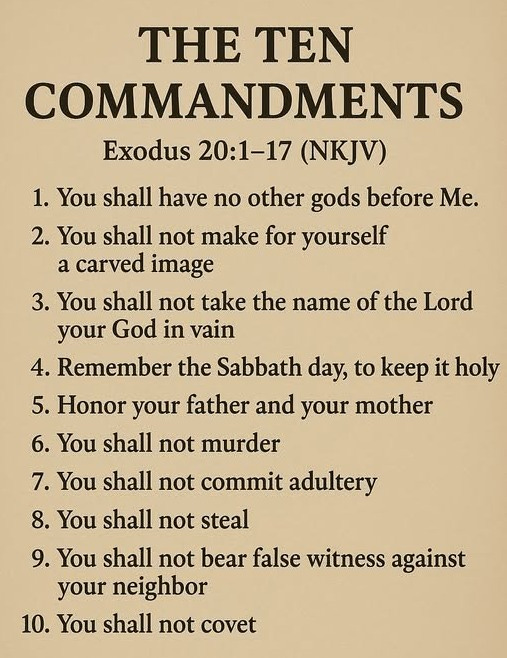
Now, I know these are not the only rules found within the Hebrew Bible; they are, however, the most famous, and half of them don’t have anything to do with morality. They’re about loyalty and offence to God. There’s no mention of rape, slavery or harm to children, but thank goodness it tells us to remember the Sabbath.
Contrast this with the Seven Tenets of the Satanic Temple:
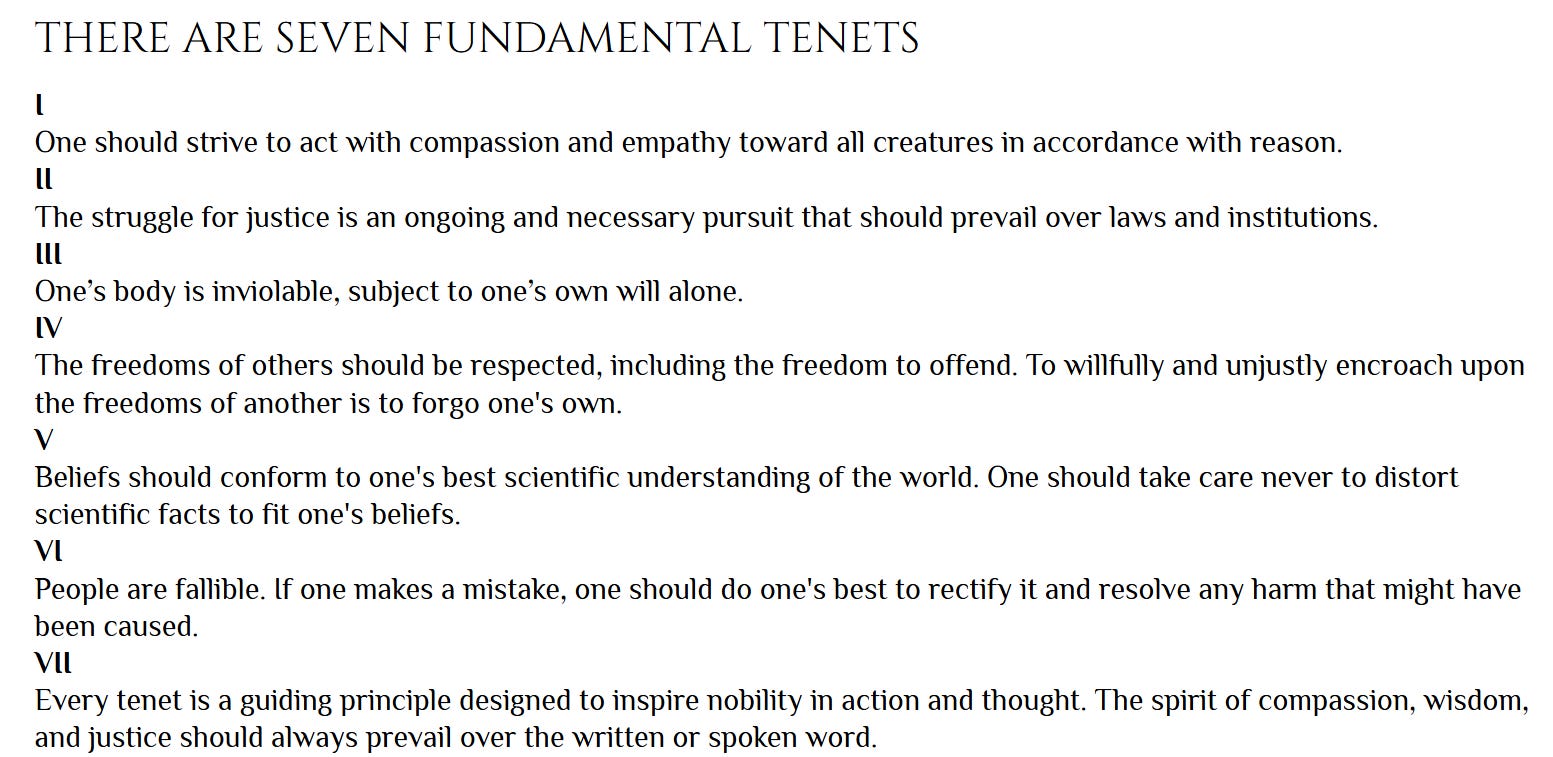
Ironically, the first point alone offers a more comprehensive ethical framework than God’s original 10. The themes you can extract from their tenets are those of freedom and honesty, two things which I also hold in high regard, and that which are severely lacking from God’s Ten.
I’m going to put myself in God’s shoes for a second, let’s see if you agree. If I were God, there would be two things I would consider of the utmost importance for humanity to know:
My existence.
Morality.
The following paragraphs hinge on these two points, so please keep them in mind while you read. But if you disagree, I’d certainly like to hear it.
Unclear divine communication
God is purported to be an all-powerful being, creating the universe and all its contents - they say there’s nothing he can’t do. Except, apparently, to communicate clearly. We see an incompatible clash between people who believe in objective morality, all the while sincerely claiming they have God on their side. If an all-powerful God existed and wanted us to know what was moral, why aren’t we in universal agreement?
Maybe letting us know that witches do not exist would have been a good idea from the start; it would have prevented tens of thousands of people from being tortured and murdered. Or take the fact that we’ve only recently concluded that marital rape is wrong. For thousands of years, countless women have suffered at the hands of their husbands. It seems God was all too shy to tell us some basic facts, so we had to figure it out ourselves.
Personally, I would make morality crystal clear from the beginning, an unmistakable, innate force within us with no room for disagreement. We all agree on basic maths, the colour of the sky, and what the best ice cream flavour is (Neapolitan), yet when it comes to important questions, God does not provide the same level of clarity.
“It may override human free will.”
He’s God. He can do anything. He can communicate with 100% precision what is and isn’t moral, while protecting human autonomy. If I knew for certain what I was doing was wrong, I could still, of my own volition, choose to do wrong. I’m not asking God to force us to do anything, only to make the guidelines of morality explicitly clear.
“God has made himself clear; those people over there are just wrong.”
Well, apparently, it isn’t clear. That’s why there are disagreements.
No one misunderstands 2 + 2. Why can’t this be the same with morality?
“It’s something we have to figure out ourselves.”
That’s just great. This almost sounds like subjective morality. Is he really going to allow human suffering to take place until we eventually ‘come around to it’? If this is the case, can we really say morality is at the top of his priority list?
This is permitting harm by inaction, which I would deem immoral.
Anyway. Enough of my anti-theist tangent. With my lack of belief in a God firmly in place, and so too with objective morality, how do I determine what is moral?
An atheist’s moral grounding
I believe there are right and wrong actions. Before the moral objectivists jump down my throat - yes, I mean right and wrong according to me, not in some grand cosmological sense. There are a few heuristics (practical rules of thumb) that I use to determine the rightness and wrongness of certain actions. I’ll briefly go through the first two points, but it’s the third where I will direct most of my attention.
Gut instinct
We would all recoil in disgust if we were to hear about how a puppy was beaten to death. This empathy either developed over millions of years of evolution or was programmed into us. How it got there is irrelevant - what’s important is that it exists, and it’s a fairly reliable and intrinsic metric of morality. We know these morals are innate, rather than taught, because infants show a sense of morality before society can influence them to develop one.
The gut instinct is not perfect. People differ in their moral reactions. But it’s a good start for most of us.
The Golden Rule
“Do unto others as you would have them do unto you”
When I mention this, I’m immediately told that I’m inheriting ‘Christian ethics’. The Golden Rule predates that religion by thousands of years, and just because Christianity discovered an ethical principle that atheists later agreed upon doesn’t mean that it’s ‘Christian-based’ ethics; it simply means we both arrived at the same idea independently. And, let’s be honest, it’s not the most complex principle to conceive.
But it’s also not flawless. People can have different preferences for how they want to be treated. The Golden Rule is one more building block in our ethical foundation.
Wellbeing and suffering
The major thing I use to determine my morality is to look at human wellbeing and its counterpart, suffering. Before we discuss why wellbeing and suffering ought to be considered, we need to talk about the nuances of each.
Exercise can be painful, and starting a new job is scary. These things make us feel discomfort and create suffering in the moment, but in the long term, they make us stronger. The suffering I’m talking about is unnecessary, undue, involuntary suffering. This is the suffering which we should work to avoid.
Conversely, eating unhealthy food makes us feel good in the moment. Short video content like TikTok gives us immediate, repeated dopamine hits. These feel good in the moment, but come with long-term negative side effects - wellbeing and pleasure are not synonymous.
Chasing a fully hedonistic lifestyle that maximises pleasure and minimises all suffering is not a path that leads to a meaningful life. We’re looking for overall, long-term gratification.
Why should we care about wellbeing and suffering?
The moral objectivists will ask why we should care about wellbeing and suffering. At first glance, this seems like an asinine question - who wouldn’t care about these things? But they raise a fair concern: if we demand objective justification, wellbeing and suffering become an arbitrary basis for morality.
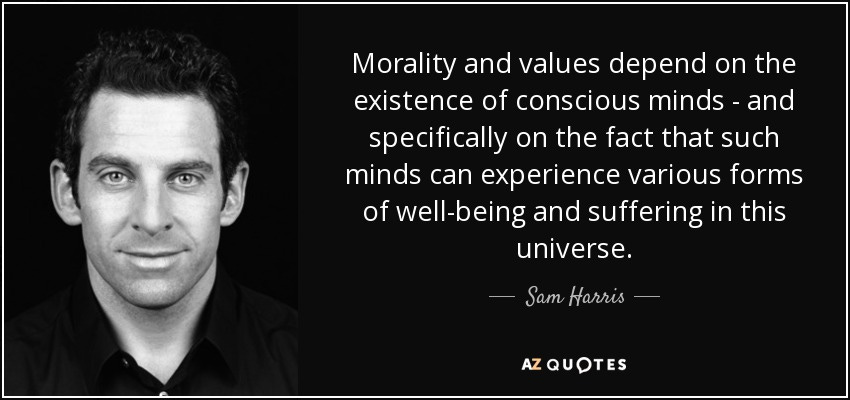
However, there is a foundation for morality if we take one small axiomatic step: conscious experience matters. Given that wellbeing and suffering can be observed and measured, it no longer becomes an arbitrary starting point but one that is directly connected to objective reality.
Every moral system has an assumed starting point. For the religious, it usually boils down to ‘Because God’. If we pressure this and continue asking why we should care about what God says, we end up at something like “Because God is objective and defines morality”. This is a starting assumption, dressed up as an objective fact.
At some point, every system has a stopping point where ‘why’ no longer applies, and ‘it just does’ becomes the answer. Mine is that conscious experience matters; for the religious, it’s ‘God said so’. I admit to having a starting assumption, and at least mine can be measured.
Even if I can’t say anything is objectively correct, we can still ask: how do wellbeing and suffering affect conscious experience? Assuming conscious experience matters, it naturally follows that we should aim to enhance wellbeing and reduce suffering whenever possible, and any actions that achieve this can be regarded as good or bad, respectively.
I almost dislike being convinced that morality is subjective, because it would be so much easier if it weren’t. For the objective moralist, morality is dictated. It’s clear, settled, and no more work needs to be done.
For those who don’t hold that view, our job is never finished. Subjective morality can never be resolved. By its very nature, moral questions remain eternally open to question, revision and improvement.
We can use some of the heuristics I mentioned to help us; however, these are only designed to inform, not to dictate. They’re tools, not rules. We will never have a day when we put the pen down and proclaim that we’ve figured morality out. The best we can do is hope that we are more informed than previous generations.
There are no gods. So despite what some folks think there is no morality handed down to us (nor do the people who believe in those religions follow the letter of the rules / morals in their holy text. Or they wouldn't eat certain things, etc). Even the people who believe various holy texts don't strictly follow those rules / morals so even they use their own judgement and don't strictly adhere to their "holy" book. So there was never any morality given to us, so whatever moral instincts we have come from nature or our culture. We have to find answers to problems and questions that come up in life, and that's not a bad thing its called being responsible. There are no saviors to make bad people suffer or make good people "win in the end". If you want justice in the world you have to attempt to the change you want to see. Do it with own hands or at least stop pretending someone else is gonna do it for you. Being lazy and apathetic happens all the time, but there is no need to pretend its a useful strategy for improving anything.
To your above reply on May 5:
Please consider speaking with someone from a religion you say "pick and choose which parts of their holy text they stick to" and how "they're applying their own standard or morality on their text."
For example, Christians are told in the New Testament that certain part of the Old (covenant) Testament no longer apply. This is not a choice a single person makes, it is the choice God makes.
Also, based on your recent discussions on X you have also made the argument for a morality that you chose based on your own standards...
I would recommend thinking a bit longer about a topic such as morality and religion that you don't actively acknowledge you adhear to.
I was once atheist and would argue that life itself does not matter and does not have value or meaning because that is a truly atheistic view (is no morality because man has no value to decide).
If you want to actually have a discussion about it, by all means, reach out.