

For all of human history, we have believed in an objective morality - a universal law telling us right from wrong, one that existed outside of the human mind, as if baked into the universe itself. Or at least, people thought they believed in objective morality. Many still think this is the case, and without it, they say, we would be lost.
I think it’s the opposite. Morality is subjective. And without a subjective moral framework, we’d be screwed.
Looking back on human history, we see an unacknowledged, yet tacit belief in subjective morality. Our moral norms vary across space and time. Your birthplace determines the society you are brought up in, which largely dictates your beliefs about right and wrong, and these societies aren’t morally static either; they’ve gradually changed over time. We don’t have the same morals as we did 50 years ago, let alone 1000 years ago. Every time we realised something was immoral, we adjusted.
This is subjective morality in action.
Slavery is an obvious example. It wasn’t just convenient to keep slaves; it was seen as virtuous and morally justified. Depending on the culture, some people were seen as ‘natural slaves’, lacking the capacity for freedom, or were deemed as uncivilised and better off under the care of others. This defence of slavery wasn’t born from ignorance or greed; it was the result of reason by intelligent people. After thousands of years of denying personal freedom, we reconsidered our position.
Even minor moral concessions are continuously made, such as the treatment of animals. Countries have created laws protecting animals because we recognise it’s wrong to be cruel to other living beings. Bear-baiting was a popular form of entertainment from the 12th to the 19th century, in which a bear was chained to a post, and dogs were released to attack it. These weren’t shady, underground events; it was organised entertainment, something to take the family to on a Sunday afternoon. If you told these people this was immoral, they’d look at you like you were crazy.
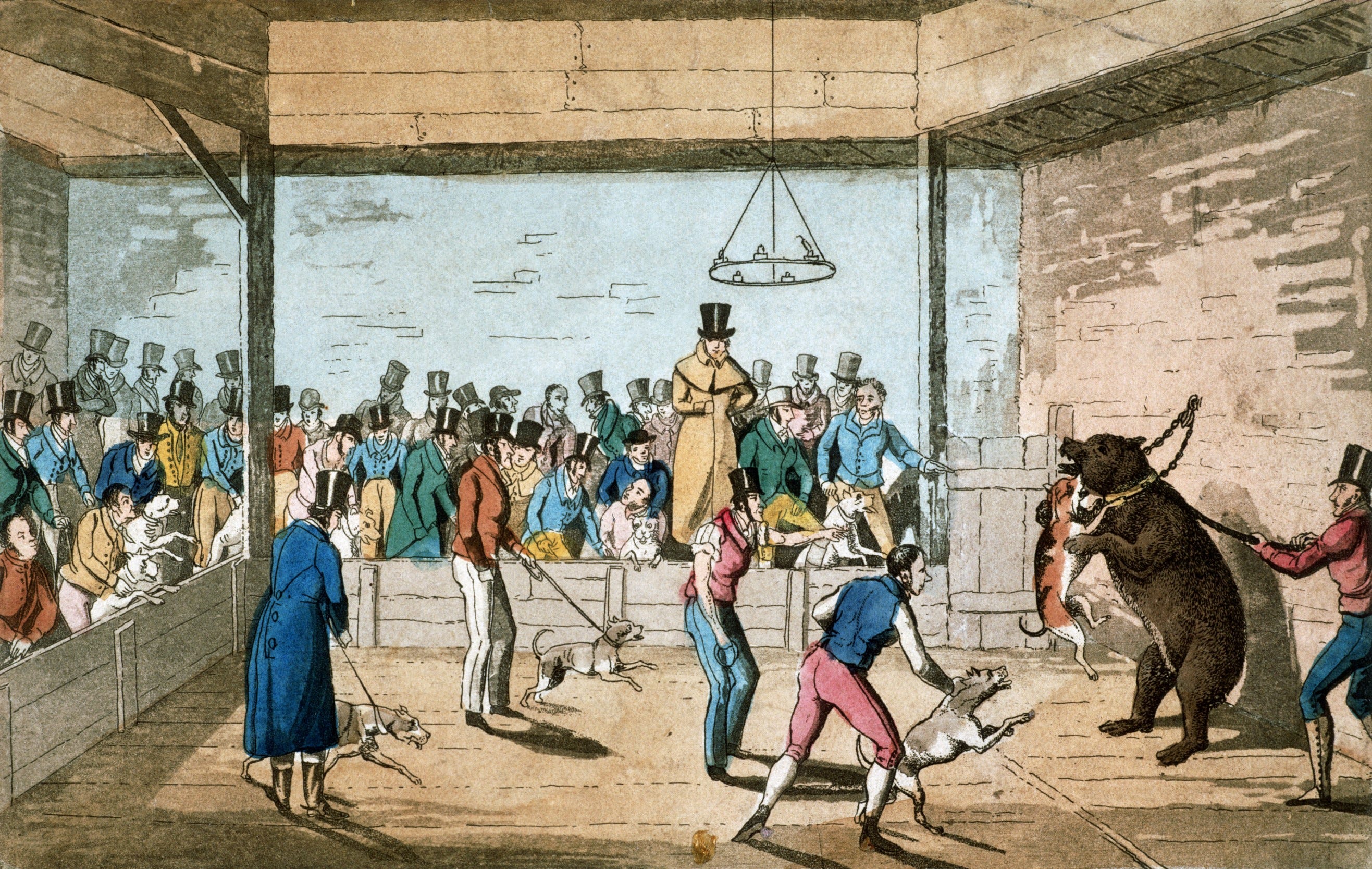
Fortunately, it became outlawed. Not because we learned something new about brutality, bears or biology, but because we decided it mattered, morally.
This ever-shifting ethical framework can only be the result of a subjective view on morality. Unless the argument is “objective morality exists, we just had it wrong back then, but we’ve got it right now” (can you feel the arrogance of this statement?), if this were the case, then morality may as well be subjective. If at any time we discover we were wrong and change, what’s the difference? This, if not outright proving that morality is subjective, at the very least shows that if objective morality were to exist, we certainly don’t have access to it.
Scared of subjectivity
One of the common complaints I hear about subjective morality is that, without objective rules, morality is ‘just an opinion’. They say I have nothing to stand on when I claim something is wrong; I can only say what I think is wrong. They’re right. It is just my opinion that murder is wrong. It also happens to be an opinion the overwhelming majority of people agree with, so what’s the issue? It is often the case that the majority of people decide what we consider moral, hence the differences across cultures and time. But this near-universal consensus regarding murder leads some to conclude that there must be an objective morality, because how else could we all come to the same agreement?
Well, what would you say if I said chocolate tastes better than concrete? The answer will be ‘agreed’. Does this mean that it’s an objective truth? Of course not, taste is subjective. But there is enough collective agreement among the masses that we can basically say chocolate tastes better than concrete. When talking about how delicious chocolate is, I am never met with ‘but taste is subjective, how can you say that if you don’t believe in objective taste?’ as is the case when I mention morality. For some reason, consensus does not translate the same as it does when it comes to morality; it is always followed by questions riddled with uncertainty.
Some people are frightened of admitting that morality might be subjective because they conclude that people will immediately start committing acts we currently consider evil. Needless to say, evil people still do these things, even if they accept objective morality, because, you know, they’re evil.
But what about the average person, in a subjective world, what’s stopping them from committing the same malevolent deeds? Well, I’m glad you asked. To answer, I’ll take a page out of Penn Jillette’s book here and say: I kill and rape as many people as I want. And the amount I want is zero.
Their fears are unfounded. Why would society fall into moral decay when it could equally (or I would say more likely) become more moral?
Fortunately for us, we can look in the rear-view mirror to see how the arc of human morality has gone. Some may point to the Nazis or North Korea as a failure to recognise and abide by objective morality, but this is a myopic point of view. We need to stretch our vision further back and ask if we are more moral than we were thousands of years ago. The answer is an obvious ‘yes’. Just because there have been unspeakable atrocities in recent memory does not mean that we have not made any moral advancement, especially considering that we look back at those acts with moral repugnance.
The proof is in the past. Across time, our morals and ethics have changed drastically -for the better.
Why moral relativism is good
The only way forward is to recognise we may be wrong.
This is the advantage of adopting a subjectively based moral system: it changes with reason. We should question what we consider moral to prevent moral stagnation.
I know how hard it is for an individual, let alone a society, to change its mind. No one likes to admit when they’re wrong, but it makes us better people when we do. The cool thing about this is that once you hear you’re wrong about something, you don’t have to be wrong anymore. You simply change your mind, and you can be right!
This means the door to previously closed moral questions will always remain open. Just as what we consider morally permissible today may change in the future, so too with things we previously dismissed as evil. However, we have the past on our side; we are informed by the lessons of bygone days, which give us the tools of reason to make better decisions for the future. By all means, argue that slavery should be brought back. We’ve had this discussion before, we have weighed the pros and cons, and we know what’s right.
Let’s not be afraid of accepting that subjective morality exists. Instead, let’s look at where it has gotten us, how far from the past we have come and how much more we will advance in the future.
Moral relativism certainly does not mean that I am unable to criticise others for their moral failings; I just need to make a case based on reason, rather than objectivity, as to why they are wrong. More on how I personally ground my ethics in a future post.
I know this is a deep subject, and I’m merely scratching the surface. My point was to show that we have always believed in a subjective moral framework, and that it’s beneficial when we do.
I’ll leave you with one final question to ponder on: what are we doing today which future generations will condemn? What is our current-day bear-baiting? We don’t know what norms will be condemned in the future, only that history shows it is a certainty.