

There’s a certain reluctance to take the term ‘meme theory’ seriously; it sounds like a complete parody - something you might find on late-night TV. However, understanding the mechanisms behind memetics is no joke; it helps explain why some memes go viral, and others fade into obscurity. More interestingly, meme theory can predict the effectiveness of political slogans, the success of a religion, and why some social movements explode in popularity.
In essence, it grants us valuable insight into how information spreads and its relationship, or lack thereof, to truth.
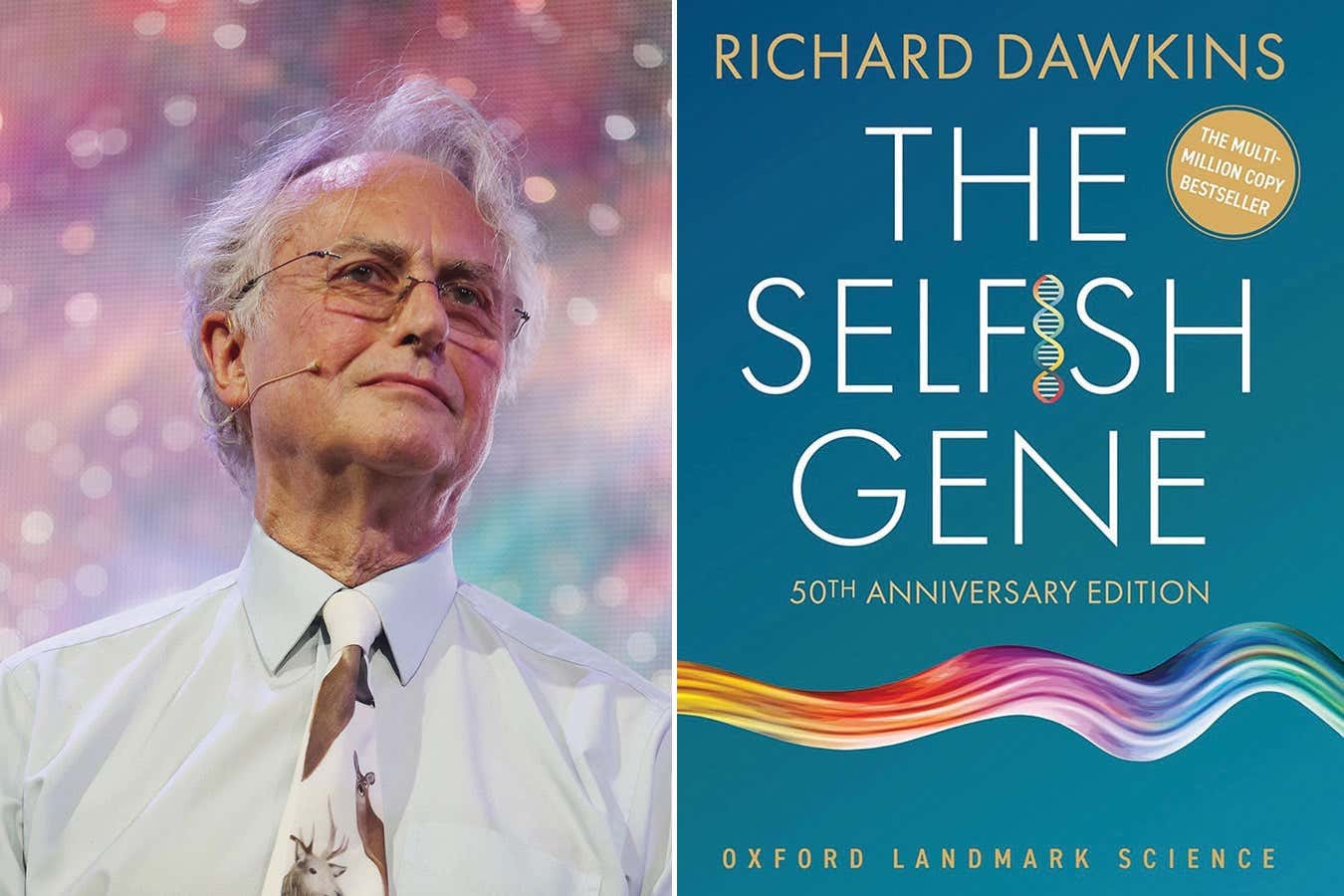
Richard Dawkins introduced the idea of a meme in his 1976 book The Selfish Gene. A gene is biological information passed from parents to offspring, whereas a meme is cultural information passed from person to person.
Essentially, memes are ideas that spread.
What makes a good meme?
For a meme or a gene to be successful, it must propagate. Reproduction is how it survives. Genes do so by helping their host reproduce, and memes spread through communication. When a meme penetrates the zeitgeist and goes viral, that’s Genghis Khan-levels of successful reproduction.
So what are the main factors that predict a successful meme?
Relevancy.
If you want a meme to go viral, relate it to current events.
I’m always excited to see how the internet reacts whenever a major event happens. Memes about the event spread like wildfire because it’s the only thing taking up everyone’s mental shelf space.
A meme about how the Shah was overthrown in 1979 is not going to spread much further than those obsessed with Iranian history. But as soon as World War 3 starts, millions of memes will be dispersed in a matter of minutes until we all die in a nuclear holocaust. Relevancy is key.
There’s also a side lesson here: we shouldn’t take our positions too seriously. If you decide to take offence at a joke because it criticises what you believe, then you’re missing out on some of the fun. If it’s a decent meme, be a good sport and give the devil his due.
Concise and simple.
At first glance, anyone should be able to figure out the message behind a meme. If it’s too convoluted and I have to spend an afternoon analysing and dissecting it on a whiteboard, the payoff isn’t worth it. It’s not about having the intelligence to understand it; it’s that memes are most effective when they are simple.
The more friction there is to understanding a meme, such as using complicated, non-standard words or ideas, the less likely it is to spread. Complicated ideas are fine; they just work best when broken down into their simplest form because when more people grasp it, it’s more likely to spread. As bad as it may seem, aim for the lowest common denominator. Smart people can understand stupid things; stupid people can’t understand smart things.
“Brevity is the soul of wit”
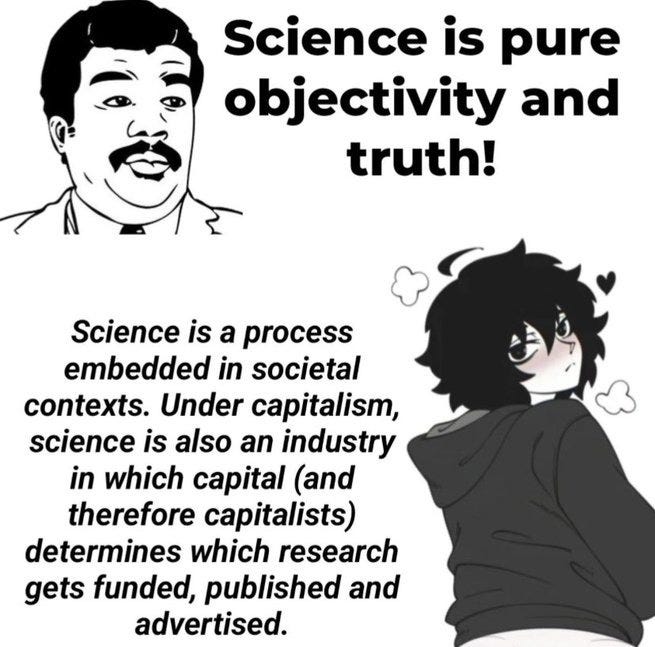
Leftist memes are a great example of what not to do. They’re long-winded because they try to include every single caveat imaginable. They try to be as precise as possible with their wording, and this usually shouldn’t be an issue, but we’re talking about memes, not academic essays. It completely misses the point of what a meme is. Their message may be correct, but the delivery system creates the condition for an unsuccessful meme, i.e. one that does not spread.
Flexibility.
If something can be applied to different contexts, then it will be.

This GIF is used to denote something you don’t want. With such a widely applicable message, we see this applied to an almost unlimited number of scenarios - same joke, different topic.
If a couple of tweaks can be made to the original meme to create something new, but still fundamentally recognisable, this is a good meme. Flexibility is an important aspect of a meme’s survivability. Adapt or die.
Religion
Religion is the perfect example of a successful meme. It is probably the most widespread idea to ever come into contact with humans; essentially every civilisation has had one. Like all memes, some religions are more successful than others.
Let’s compare the practices and rules of two separate religions and theorise which one would be more successful.
Judaism vs Islam
To convert to Judaism, one must intensively study the religion. Typically, after at least a year of study and integrating into the Jewish community, the potential convert then appears in front of 3 rabbis who will assess their knowledge, commitment and seriousness. If they get the green light, there are a few more rituals that have to be performed, such as circumcision for males. While there are minor differences between denominations, the overall point remains the same - conversion to Judaism is a long and arduous journey. Contrasting this with Islam - if one says with sincerity: “There is no god but Allah, and Muhammad is the messenger of Allah”, they become Muslim. Repeating a single sentence is all it takes to convert.
Now, what happens if one tries to leave? Apostasy in Islam carries the death penalty in a handful of countries. If the state doesn’t kill them, vigilante or honour killings can occur. Although honour killings for apostasy are rare, the threat of violence still looms for those considering leaving the religion. In Judaism, there is nothing close to this.
Islam is also more conversion-oriented. Like Christianity, proselytising is an important part of the religion. Members will actively go out and seek to convert people. Judaism does not actively recruit converts; in fact, it almost discourages them if they’re not dedicated enough. This makes for a low, but very committed number of Jews.
So let’s theorise a bit. We have two competing ideas. One seeks to convert others, has a low barrier to entry and a high cost of leaving, while the other makes it difficult to join, does not proselytise, and is easy to leave. What do you think the numbers would look like?
Muslims outnumber Jews about 120 to 1.
Of course, memetics isn’t the only explanation for the disparity; they are dense religions, and there are a variety of factors as to why Islam is more widespread. Regardless, meme theory plays a role in influencing how information spreads.
There’s just one thing missing…
We’ve talked about the prominent aspects of what creates a successful meme - brevity, understandability, low barrier to entry, etc., and this list is nowhere near exhaustive - but you may have noticed something is missing, something which should be at the very top of the list because we purport to care about it… Truth.
Unfortunately, the spread of information is not contingent on its accuracy. We are not truth-seeking animals. We are tribal creatures who prefer comfort and safety over truth. I’ve written about this before, but when evaluating a claim for the first time, truth rarely enters the equation. We’re much more concerned with how others will view us, or we’re too busy judging a claim not by its truth but by who is making it and which side they appear to be on.

Our tribal nature in action
When we see a piece of news that confirms what we already think is true, we’re not going to look at it with as critical an eye as if we were to disagree with it.

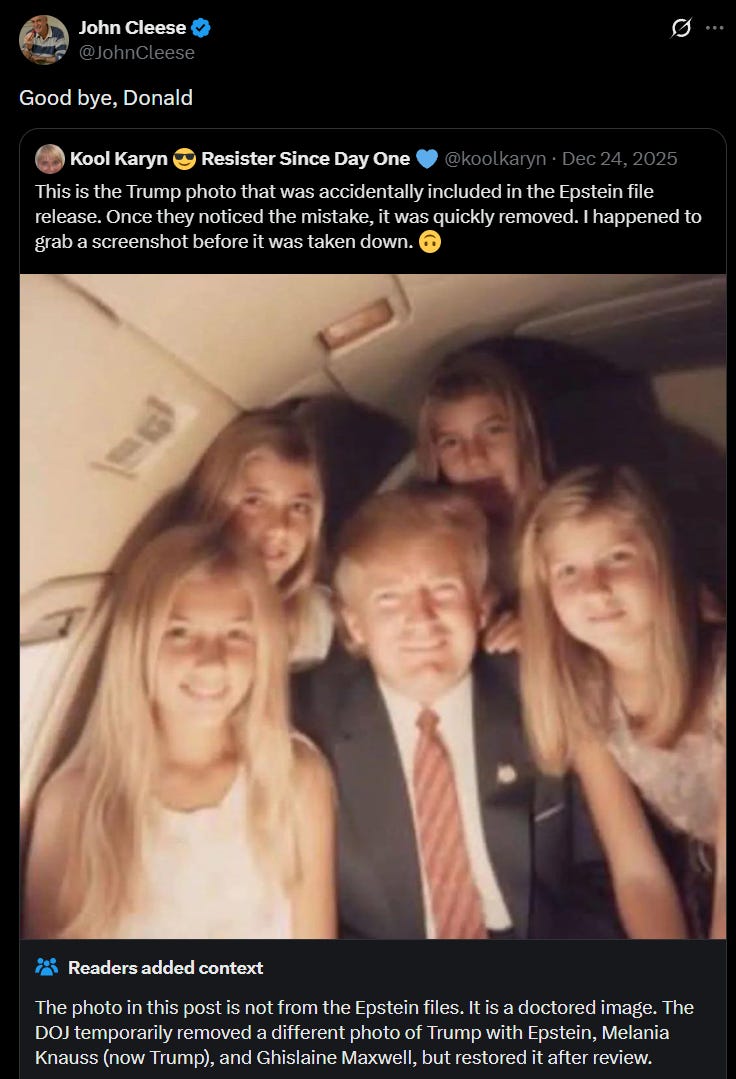
It’s how prominent people like John Cleese fall for obvious AI images. Even after it’s been pointed out it’s fake, he does not retract, apologise, or even acknowledge the lie. He’s anti-Trump. It’s not just a position he holds; it’s his identity. If he sees something that agrees with it, he’s going to assume it’s real because it agrees with who he feels he is.
Where does this lead us?
This wasn’t a contrived or preplanned way to destroy truth. A group of people didn’t sit around a long table, with Dawkins at the head, plotting to use memes for this purpose.
Viral memes, by their very nature, will not have truth as their driving factor, as truth is never the priority when it comes to the spread of information, and it never has been.
Memes and genes follow the same pattern. They are created, passed on, and spread. Ineffective ones lose out to the more successful. Genes optimise us for survival, not for creating something that can see reality as it really is. For instance, humans perceive only a tiny fraction of the colours in the light spectrum. As long as we can find food, not get eaten by a tiger and avoid walking off a cliff, that’s all that matters.
Memes do not care for truth. Accuracy is a bonus, not a prerequisite. If a piece of information is concise and easy to understand, it’s more likely to spread. If one has to go through a multitude of cognitive hoops to comprehend, it won’t spread as far.
How information is presented is far more valuable than its veracity.
There is no real solution to this. Memes will take the path of least resistance to survive, and if that means sacrificing truth, it will happen. So, the onus is on you. Don’t be lazy. The things you agree with should be looked at with as much scrutiny as the things you disagree with. Everyone is capable of deceit, just as everyone is capable of seeing through deceit. It’s just up to you whether you want to.