

Gamification is the use of game design elements in non-game activities to encourage engagement and behaviour change.
It sounds like a deceitful way for companies to get us to spend more money, and it is. It’s a highly effective tactic designed to keep us coming back. However, we can’t label gamification as purely predatory, as many companies ethically gamify their products to improve the wellbeing of their users.
It’s a tool. It’s not if gamification is used, it’s how.
It's Everywhere
The more I think about it, the more I realise how ubiquitous gamification is. Frequent Flier points are among the earliest and most well-known forms. And when you think about it, stamp cards where your 10th purchase is free are a form of gamification. Even my barber has one!
Apps, however, take this to a whole new level. I don’t think we realise how much they have gamified themselves, and to what extent. In fact, it’s rare to find a non-gaming app that hasn’t gamified itself. If you ever get a notification about a streak, a medal, or a progress bar (95% - you’re almost there!), that’s gamification.
Let’s dive in.
Uber
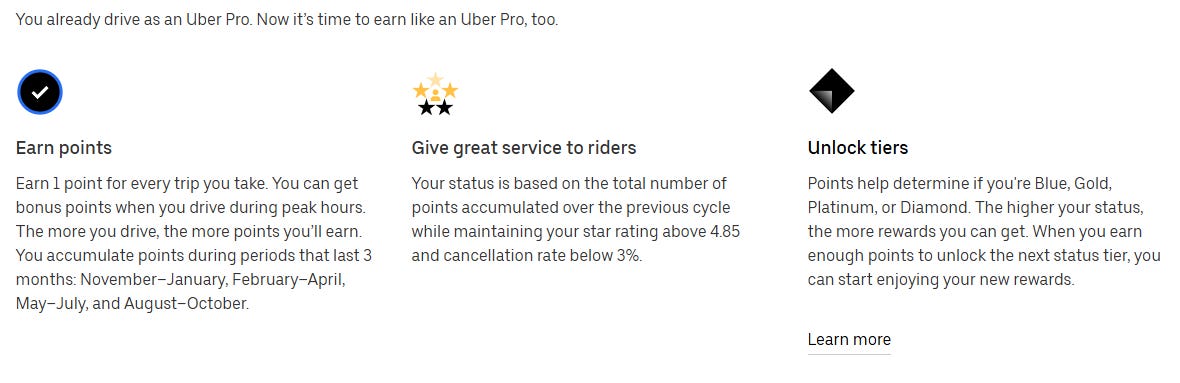
Uber creates strong incentive structures for their drivers. They can earn rewards such as fuel discounts based on their level, and to rank up, they must meet certain criteria regarding their star rating and trips. This incentivises drivers to accept trips, even when it’s not worth their time. It means a better service for the customer, but it’s at the driver’s expense. Drivers are encouraged to stay out longer to take advantage of bonuses, bonuses they would otherwise lose if they clocked off early. The drivers aren’t just making a living any more; they’re playing a game.
Temu
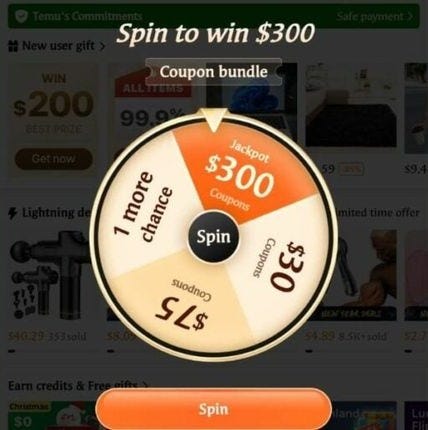
You know it’s off to a good start when you’re met with a gambling mechanic upon opening Temu; a giant spinwheel starts, where you can be rewarded with major discounts. If you land on one, confetti flies out - hooray! Time to spend some money.
Temu is the ultimate place to see persuasion and manipulation pushed to their extremes.
There’s always a TOP RATED, ONLY 5 LEFT or a #1 BEST SELLING tag attached to a product. Everything from the scarcity principle to social proof and other subtle tactics is used to nudge you toward making a purchase. Everything they do is intentional. These tactics are well-known and deliberately used to induce certain behaviour when implemented correctly.
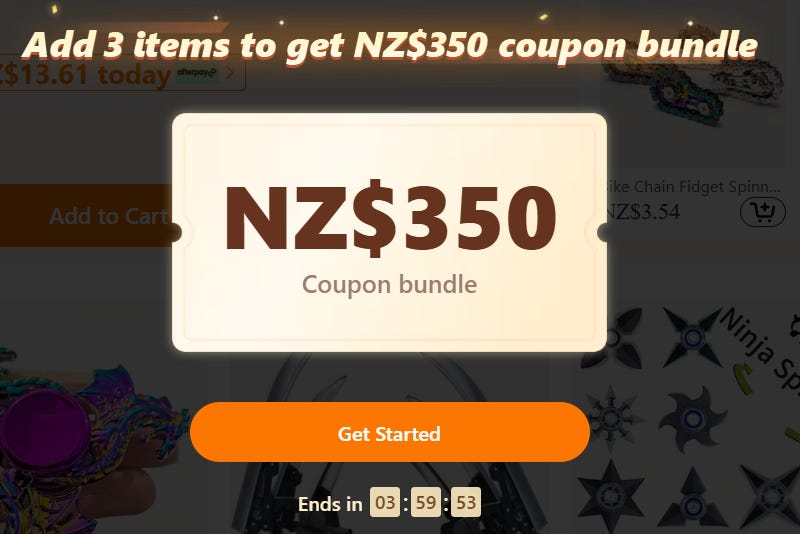
I jumped on Temu just now for research, and I felt an overwhelming sense of compulsion to buy something. This isn’t an accident or luck; it’s a deliberate attempt to manipulate human nature.
There’s a thin line between subtle manipulation and outright exploitation. Temu seems to enjoy tap dancing on that line.
The good.
So far, I have portrayed gamification in a rather sinister light, and there’s plenty to criticise, but it isn’t all bad. Some companies gamify their products to benefit both themselves and the user. For instance, my health insurance encourages me to exercise. I can earn points each day based on the exercise I do, and if I accumulate enough by the end of the week, I receive a reward.
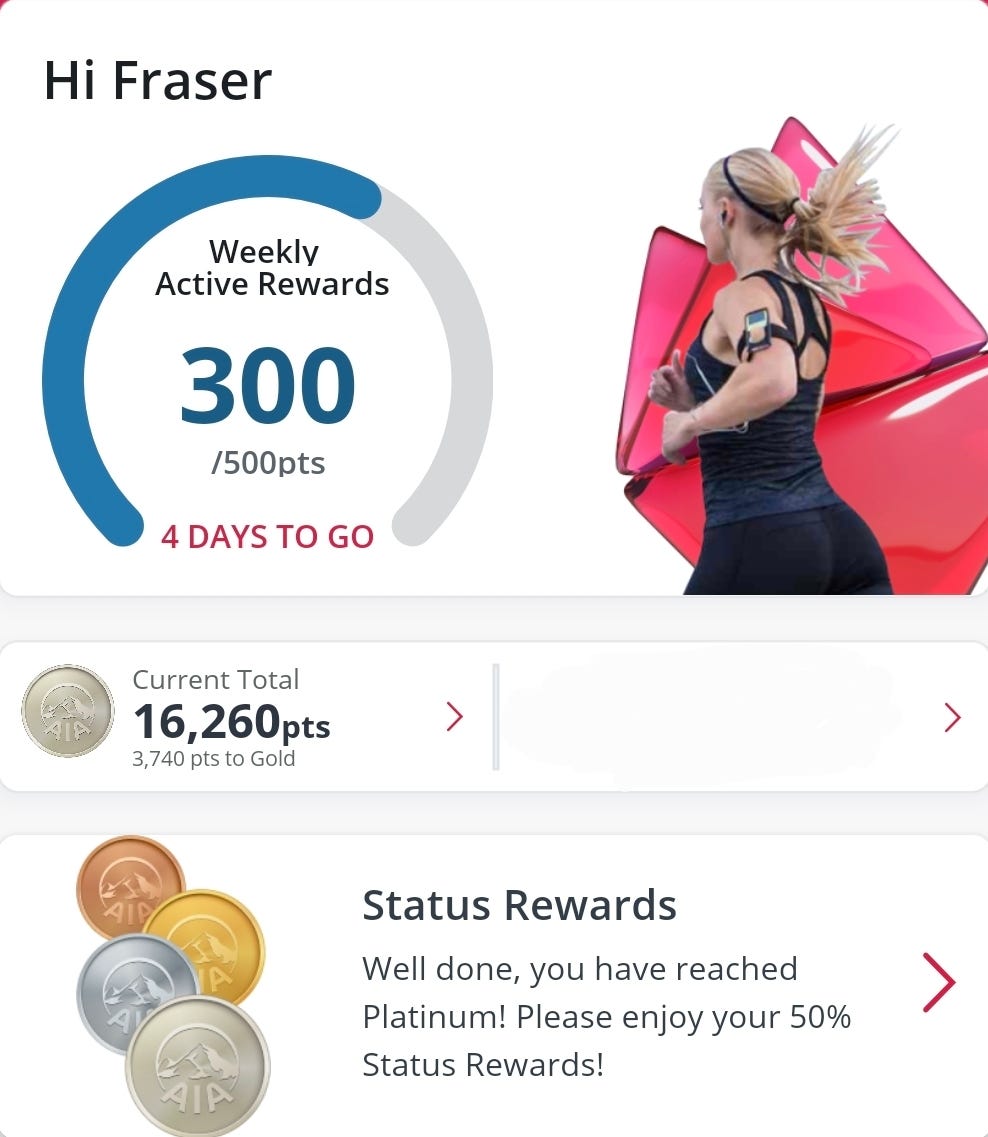
They get a healthier client who is less likely to claim health insurance, and I get a $5 voucher. Is the $5 worth the 5ish hours of exercise I do every week? Of course not, but I exercise a lot anyway, and this gamification tactic only makes me more motivated.
Duolingo is a language-learning app with a highly successful gamified system; 500+ million downloads attest to this. It’s filled with quests, achievements, and chests to keep you coming back. I was watching a workmate learn Russian. He was about to log off before he noticed that if he played one more round, he’d get to the top of the leaderboard and secure a promotion. This virtual competition was all he needed to do another round. A meaningless incentive that worked.
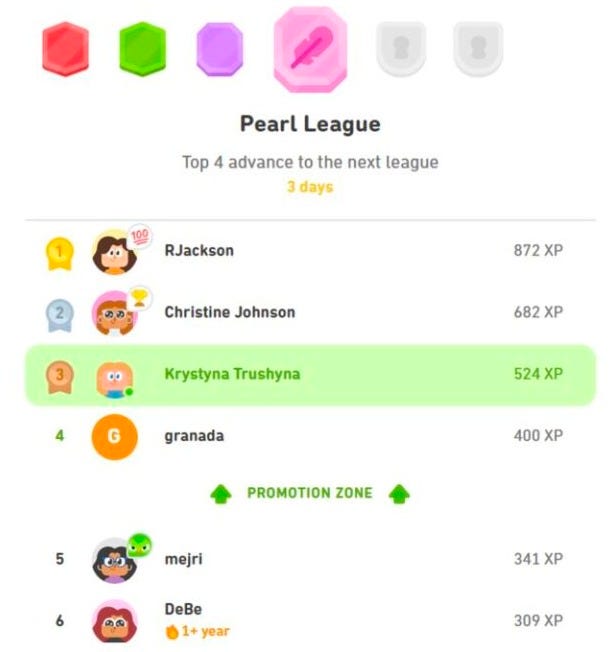
When you zoom out, most of the rewards these apps give us are meaningless. A virtual badge, a token, some points - they aren’t of any real value, but it feels rewarding. I love seeing the animation when I rank up or the celebratory fireworks when I hit 10,000 steps. That’s the real achievement, and it’s what brings people back for more.
What I do
So, essentially, every big tech business has gamified its product to some extent. Why do they do this? To put it simply… It works. The global gamification market in 2025 was $19.4 billion; they wouldn’t be spending this much if it didn’t work. So, I thought, if it works for them, why can’t it work for me?
I’m down 5 kgs and have saved a couple hundred dollars over the last few months. I purposefully go through this weight change every year, but this time I did it with ease.
My bullet journal was key in this process. It is a physical organisational book that I use to get my life together.
My prized possession is the habit tracker. Every day, I try to achieve as many daily habits as possible, and when I complete them, I put a wee scribble in its corresponding box. I’ve been doing this for years, and it gives me a visual representation of how well I am doing over the month. Ticking something off for the day drives motivation.
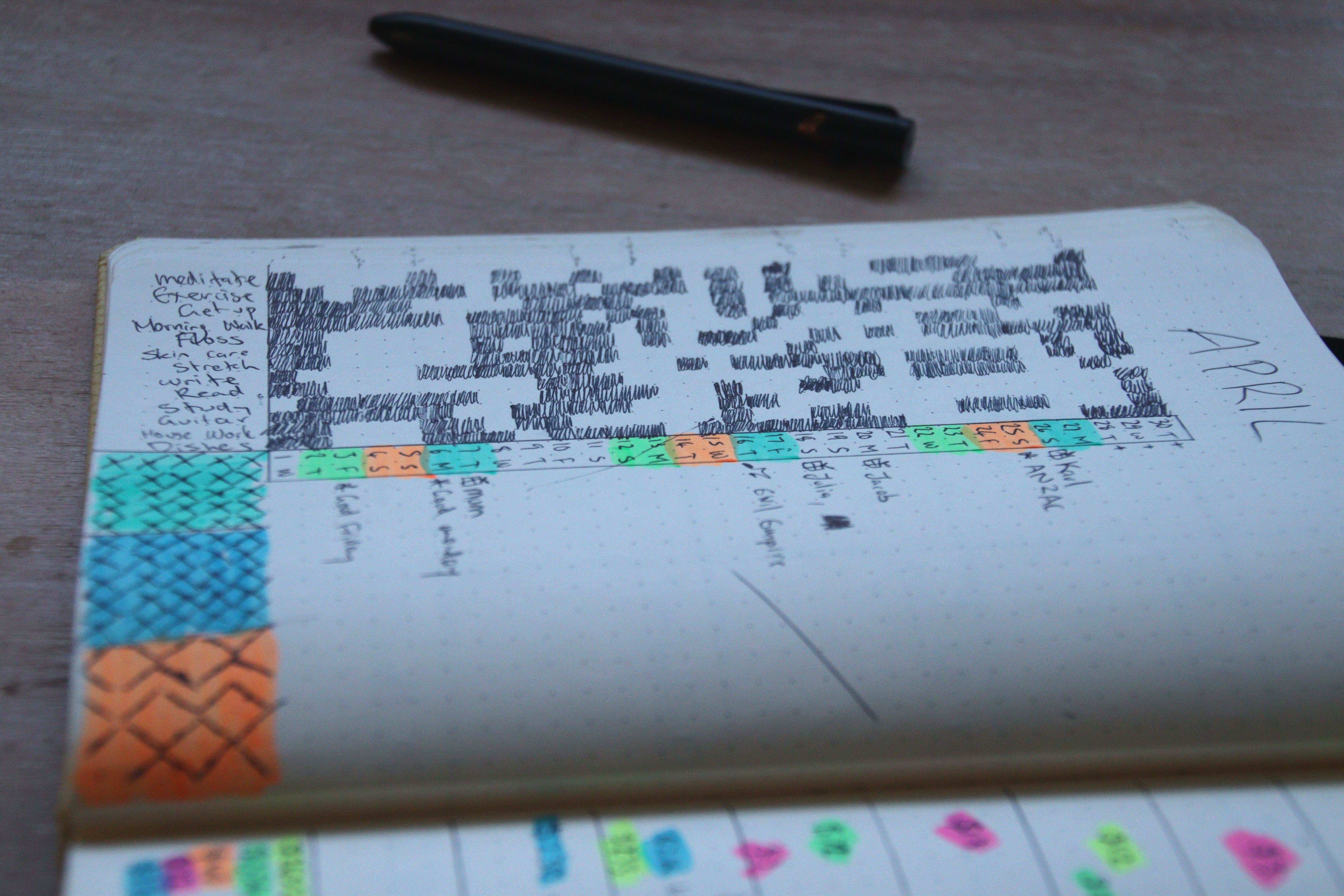
So now it was my turn to get gamification on my side.
First question: What’s my goal? Lose weight.
How can I do this? Cut back on takeaways.
In my bullet journal, I have set aside 5 rows of 5 - this is my progress bar. Each habit I complete earns me one point. When I score a point, I put a dot in one of the colourful boxes. After I fill the boxes with dots, I draw a slash through the box in one direction, then a slash in the other direction. Once I have completed the 5 rows of 5, I get my reward - a takeaway.
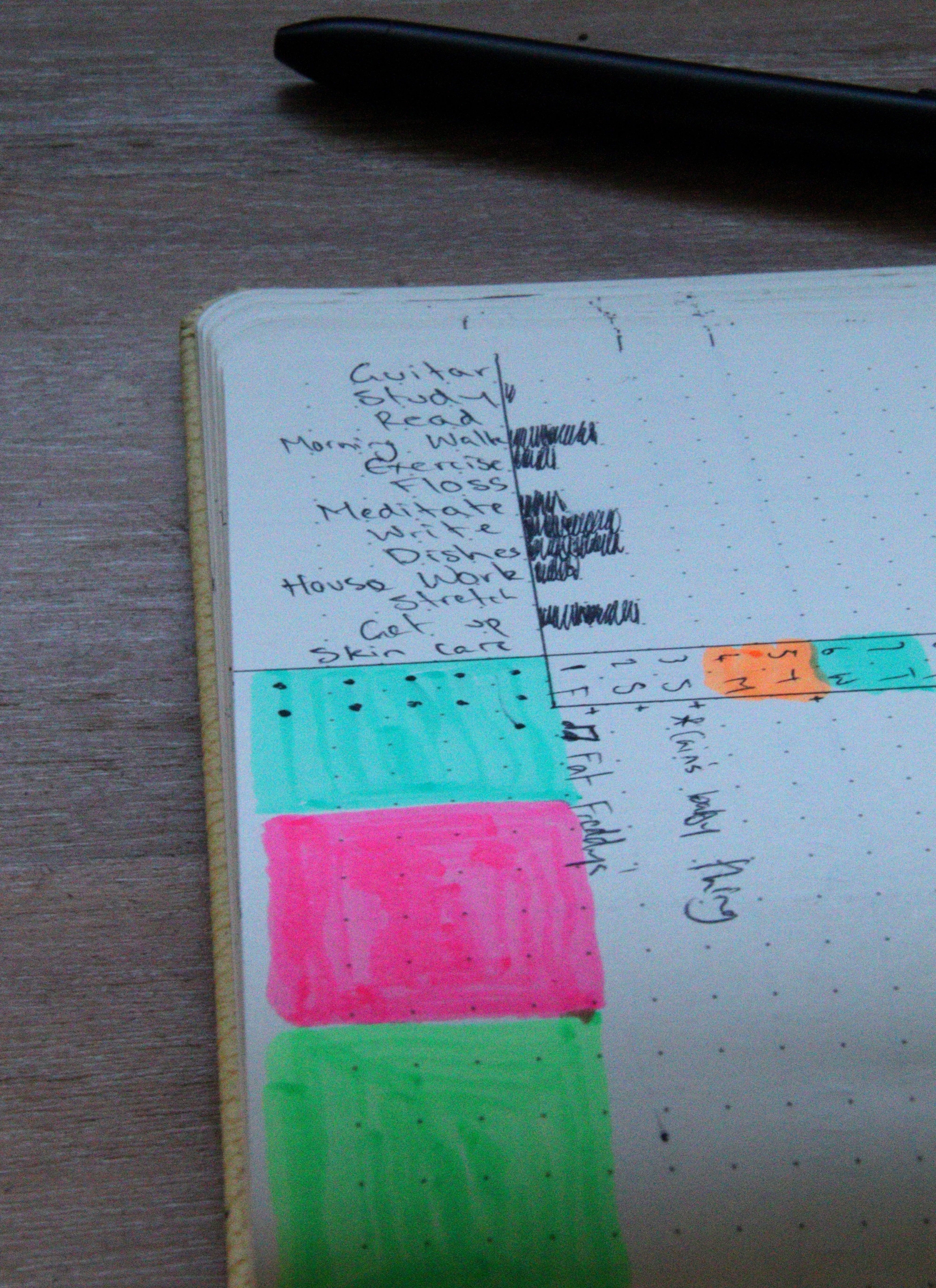
Sure, I get satisfaction from ticking off my daily habits. But the takeaway meal, once I fill up one of the coloured boxes, is the real dopamine hit. Being the food person that I am, I plan this takeaway well in advance. The anticipation is almost a reward in itself, knowing that in a few days I get to have a delicious curry or a crispy oven-baked pizza. You’d think it might be frustrating, but no, it’s something to look forward to. It’s exciting, it’s rewarding.
This system encourages me to cook meals at home and meal prep efficiently. But most importantly, it’s turned something mundane into a game. Losing weight has suddenly become enjoyable. I get to see my progress bar slowly rise with each habit ticked off, with a worthwhile reward at the end. It’s free dopamine.
This system that I’ve created is strangely compelling. Thanks, gamification.
What you can do
Let’s see what else makes for effective gamification so you can create your own game for your specific goal.
Rewards
This is the bread and butter of gamification. A reward can be as big as buying yourself a gift or as small as allowing yourself to game for a few hours. Daily log-in rewards, weekly rewards, or monthly achievements can be attained based on how well you’ve done. Having larger rewards based on merit can push you to go the extra mile.
Progress
Humans are driven by progress. We’re motivated when we see personal improvement. So you’ll need a way to record your progress. It’s one of the reasons gym-goers record what they lift: looking back and seeing improvement is highly encouraging. It’s fulfilling to know the work you put in pays off.
Streaks

Streaks work because no one wants to break the chain and start again. This pressure helps you maintain your habits. Even if you’re not doing a comprehensive stack of habits like I am, maybe you just want to exercise each day or go to bed at a reasonable time; streaks are a perfect gamification tactic to implement into your life.
Social pressure
This can be a harder one to implement because it requires others to play the game. Strava, a running app, will upload your recent physical activity for others to see, allowing them to give you likes or ‘kudos’, as they call it. If you receive a kudos, the notification is a small dopamine hit - someone gave you recognition for your work. If you can get others on board, social accountability helps tremendously.
Double points
Here’s an opportunity to earn DOUBLE points. Maybe weekends are when you generally lounge about; well, that’s your opportunity to earn double points. It’s a bit more tempting to get off the couch now, isn’t it? Or if there’s one specific habit that you’re struggling to develop, maybe for an entire week, you can earn double points each time you complete that habit.
The harder the habit, the more rewards
I’m not fussy about how some habits are more difficult or take longer to complete than others. But I can understand how someone would want to be rewarded more for 1 hour’s worth of exercise than for flossing their teeth. So maybe you can split habits into different tiers, where completing exercise is worth 2 points for half an hour and 5 points for an hour.
The point of your gamified system is that it’s open to adjustment over time. If you find something isn’t working for you, remove it. If you have a brilliant idea that you think will help, test it out. Either way, gamification is almost guaranteed to work. However, you must stick to the rules you have set yourself.
You can make your system as comprehensive or as minimal as you like. I’ve always said that the best diet is the one you can stick with, and the same goes for gamification. The best system for you is the one you enjoy playing. Billions of dollars show that gamification works; now it’s up to you to figure out how to make it work for you.
I use the principle of the Sims health/happiness 'meters' (tailored to me) when I can't pinpoint what's making me unhappy. Is my social meter running low? am I needing some outdoor time? Etcetc it's pretty cool, wish someone made an app for this in real life